





United States Secretary of State Marco Rubio warned on Face the Nation that Iran’s threatened closure of the Strait of Hormuz would be “a suicidal move,” saying such an action would provoke global backlash and severely damage economies across the world. “The first people that should be angry about it are the Chinese government,” Rubio said, noting that China relies heavily on oil shipments through the strait. “They’re gonna pay a huge price, and every other country in the world is gonna pay a huge price.”
While he avoided laying out specific U.S. military options, Rubio stressed that the United States would defend its interests and described Iran’s growing alignment with Russia as part of a broader concern. “They’re not even going to be in the neighborhood of a nuclear weapon,” he said, calling for a diplomatic agreement that limits Iran to a civil nuclear program with no access to weapons grade materials.
Rubio’s remarks come at a moment of heightened tension across the region. Iran’s parliament has already voted to endorse the closure of the Strait of Hormuz in response to recent U.S. airstrikes, but the final decision lies with the country’s Supreme National Security Council. The narrow waterway serves as a critical artery for global oil shipments, and any disruption could send energy markets into turmoil. While analysts see a full closure as unlikely, the threat alone has already rattled international partners. As Rubio pointed out, the economic consequences would not be limited to the U.S., but would ripple across Asia and Europe as well, placing pressure not just on Tehran, but on global powers like China and Russia to intervene diplomatically.
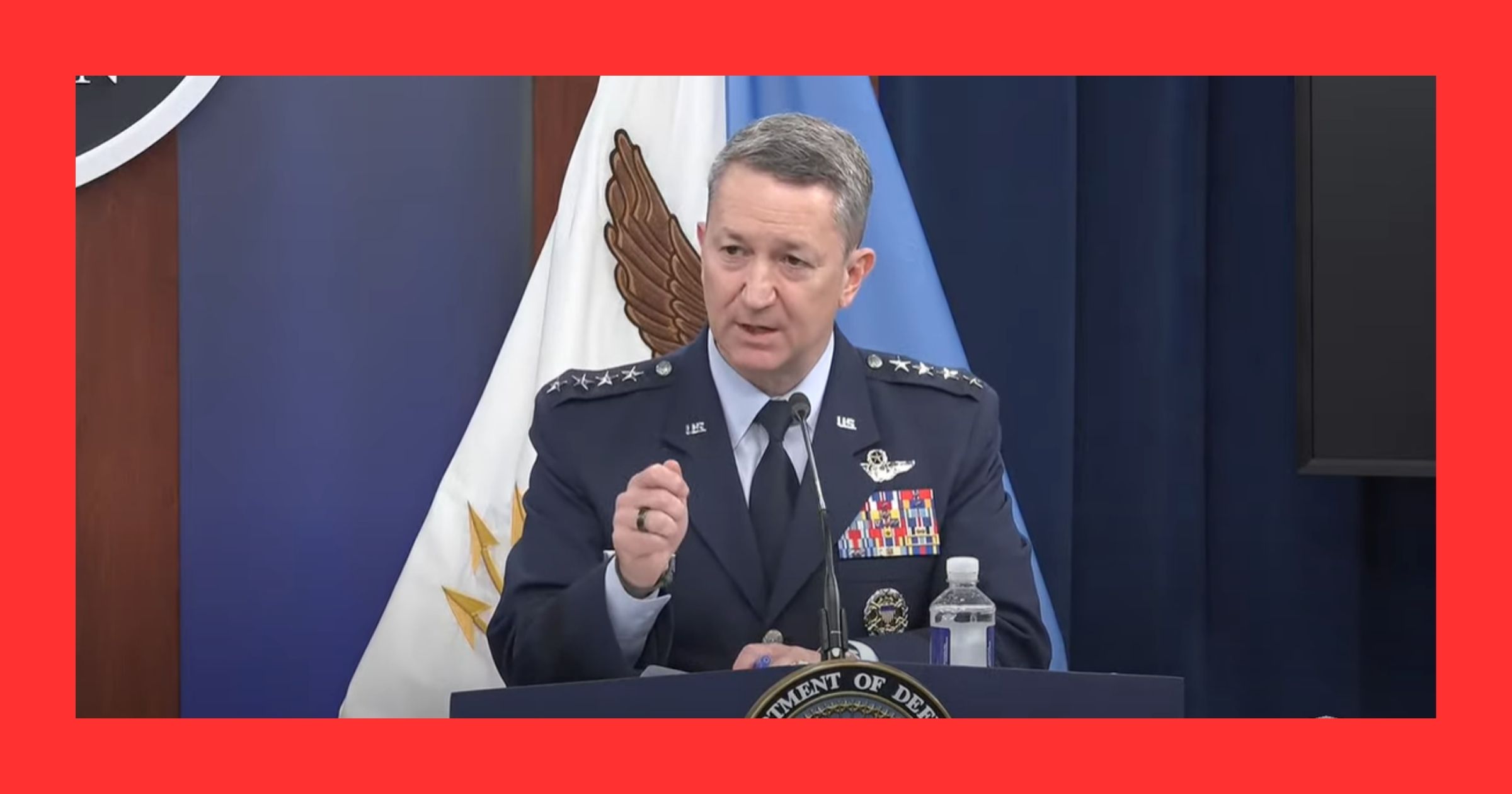
In the early hours of Saturday morning, under direct orders from President Trump, the United States executed one of the most complex and far-reaching military strikes in recent history. Operation Midnight Hammer targeted three Iranian nuclear facilities in a coordinated, multi-domain assault that U.S. military officials say has dealt a severe blow to Iran’s nuclear weapons infrastructure.
Operation MIDNIGHT HAMMER was a success. pic.twitter.com/3SNkHRMWMI
— DOD Rapid Response (@DODResponse) June 22, 2025
According to U.S. Air Force Lieutenant General Dan “Razin” Caine, who provided the official briefing Sunday morning, the strike was carried out under the authority of U.S. Central Command and involved over 125 aircraft, including seven B-2 Spirit stealth bombers and dozens of refueling and support aircraft. The operation also marked the first combat use of the GBU-57 Massive Ordnance Penetrator, a 30,000-pound bunker-busting bomb designed to destroy hardened underground targets.
The mission began at midnight Eastern Time on Friday, as seven B-2 bombers launched from the continental United States. To preserve the element of surprise, part of the strike group diverted west into the Pacific as a decoy, while the primary strike package flew east toward Iranian targets. Throughout the 18-hour flight, the bombers completed multiple in-flight refuelings and maintained near-radio silence to avoid detection. Upon reaching the Middle East, the B-2s synchronized with escort and support aircraft in a carefully choreographed maneuver that General Caine described as requiring “exact synchronization across multiple platforms in a narrow piece of airspace.”
At approximately 5:00 p.m. Eastern Time on Saturday, a U.S. guided missile submarine operating in the CENTCOM area of responsibility launched over two dozen Tomahawk Land Attack Missiles targeting surface infrastructure at Esfahan. This preceded the main air assault and was intended to disorient Iranian defense systems ahead of the aerial penetration.
Shortly afterward, fourth- and fifth-generation U.S. fighter aircraft surged ahead of the bomber formation, acting as decoys and performing sweeps for surface-to-air missile threats and enemy aircraft. These fighters also fired suppressive ordnance at likely SAM launch positions to clear the way for the strike package’s entry into Iranian airspace.
The lead B-2 bomber reached the first target over Fordow at 6:40 p.m. Eastern Time (2:10 a.m. local Iran time) and released two GBU-57 bombs onto fortified underground nuclear facilities. Within the next 25 minutes, the remaining bombers struck additional targets at Natanz and Esfahan, dropping a total of 14 MOPs across the three sites. The final wave of Tomahawk cruise missiles struck Esfahan just after the bombers’ exit to maximize confusion and preserve the element of surprise.
Remarkably, General Caine stated that U.S. forces encountered no resistance on the way in or out. “Iran’s fighters did not fly,” he said. “It appears that Iran’s surface-to-air missile systems did not see us.” U.S. officials currently assess that no shots were fired at any component of the strike package during the operation.
Altogether, approximately 75 precision-guided munitions were used, including the 14 GBU-57 bombs and over two dozen cruise missiles. The B-2 strike itself was the largest operational deployment of the aircraft in U.S. history and the second-longest mission ever flown by B-2 crews, surpassed only by operations in the immediate aftermath of 9/11. Supporting commands included U.S. Strategic Command, Transportation Command, Cyber Command, Space Command, European Command, and Space Force—demonstrating a global coordination network built for maximum reach and discretion.
Battle damage assessments are ongoing, but preliminary analysis suggests all three targeted sites sustained “extremely severe damage and destruction,” according to General Caine. The Fordow facility in particular, built deep underground and heavily fortified, was believed to be critical to Iran’s near-term nuclear weapons capability. The GBU-57s used in the strike were developed specifically to penetrate reinforced bunkers like these.
The scale and secrecy of Operation Midnight Hammer surprised even many inside Washington. According to General Caine, only a limited number of planners and decision-makers were read in on the details and timing of the operation. Operational security was reportedly a top concern for the president, Secretary of Defense, and senior commanders. The mission remained undisclosed until after all ordnance had been delivered and assets were safely on the return flight.
In the hours following the strike, force protection levels were raised across U.S. positions in Iraq, Syria, and the Gulf. The Pentagon confirmed that troops in those regions remain on high alert for potential retaliation from Iran or its regional proxies. General Caine closed his remarks with a warning: “Any Iranian retaliation would be an incredibly poor choice. We will defend ourselves.”
With the operation now public, attention will shift to diplomatic fallout and Iran’s potential response. But inside the Pentagon, officials are already calling Operation Midnight Hammer a landmark in military coordination, stealth warfare, and strategic deterrence. “No other military in the world could have done this,” General Caine said. “And no other force has the precision, discipline, and reach that our Joint Force demonstrated last night.”
Iran’s Foreign Minister Seyed Abbas Araghchi has condemned this morning’s U.S. airstrike as a “grave violation” of international law, accusing Washington of unlawfully targeting “peaceful nuclear installations.”
The United States, a permanent member of the United Nations Security Council, has committed a grave violation of the UN Charter, international law and the NPT by attacking Iran's peaceful nuclear installations.
The events this morning are outrageous and will have everlasting…
— Seyed Abbas Araghchi (@araghchi) June 22, 2025
In a statement posted just after midnight Tehran time, Araghchi warned that the attack constitutes a breach of the UN Charter, the Non-Proliferation Treaty (NPT), and international law. Calling the strike “dangerous, lawless and criminal,” he said the consequences would be lasting and that Iran reserves “all options” to defend itself.
Araghchi’s remarks reflect the official position of Iran’s government. As the country’s top diplomat, his use of legal terms like “legitimate response in self defense” signals a shift toward justification for retaliation. The language, while measured, clearly sets the stage for escalation.
A ripple of confusion spread through the Tulsa, Oklahoma rally as a woman in the crowd shouted, “We just bombed Iran.” Moments later, Senator Bernie Sanders was handed a slip of paper by an aide. It was a printout of Donald Trump’s Truth Social post, confirming the strike. The audience quieted as Sanders read the statement aloud.
The reaction was immediate. The crowd broke into chants of “No more war,” echoing off the walls of the venue. Sanders stood silently for a beat, then raised his voice over the noise. “It is grossly unconstitutional,” he said firmly, clearly shaken by the news but unwavering in tone.
“The president does not have the right to take this country to war,” Sanders declared. “The only entity that can take the country to war is the U.S. Congress.” His words drew thunderous applause and underscored a broader warning: that decisions of this scale cannot be made unilaterally, even by the Commander-in-Chief.
by Met Middleson
June 21, 2025
President Donald Trump announced this evening that the United States has completed airstrikes on three nuclear sites in Iran: Fordow, Natanz, and Esfahan. The statement, posted to Truth Social, described the mission as “very successful” and confirmed that all aircraft have exited Iranian airspace.
According to the post, the primary target, Fordow, received a “full payload of bombs.” Trump praised U.S. military forces for the operation, calling them “great American Warriors” and emphasized that no other military in the world “could have done this.”
Trump ended the announcement by declaring, “NOW IS THE TIME FOR PEACE,” without elaborating on next steps or potential diplomatic outreach. The Iranian government has not yet issued a formal response. The international community is expected to react swiftly to this escalation.
President Trump announced that he will deliver an Address to the Nation at 10:00 P.M. Eastern from the White House, calling it a “historic moment” following what he described as a “very successful military operation in Iran.” He declared that “Iran must now agree to end this war.”
by Met Middleson
June 20, 2025
President Trump forcefully rejected Director of National Intelligence Tulsi Gabbard’s assessment, saying “She’s wrong” when asked what intelligence supported his claim that Iran is actively developing a nuclear weapon.
Speaking to reporters outside Air Force One, Trump said he is relying on intelligence briefings, though he did not specify which sources support his claim. His comments directly contradict Gabbard’s recent public statement that U.S. agencies had found no proof of a “systematic effort” by Iran to build a bomb.
Onboard Air Force One on June 17, Trump went further: “I don’t care what she said,” he said, asserting, “I think they were very close to having one.” This marks a stark public rebuke of his intelligence chief amid heightened tensions over Iran’s nuclear program.
Trump’s language sends a clear message, those who contradict him publicly are treated not as internal advisors but as external opponents. Gabbard may still hold the title of Director of National Intelligence, but after this exchange, her standing within the administration looks increasingly uncertain.

by Met Middleson
June 20, 2025
Judge Michael Farbiarz announced in federal court that Mahmoud Khalil, a Columbia graduate and legal U.S. resident, will be released from custody. Judge Farbiarz called it “highly unusual” that the government would continue to detain Khalil, since he poses no apparent flight risk. Khalil had been held at a detention center in Louisiana while facing allegations that he misrepresented information on his green card application.
His legal team asked the court to either release him on bail or move him to New Jersey, near his family. While the judge previously allowed the government to continue detaining Khalil based on those application concerns, he rejected a separate claim by the U.S. State Department that Khalil posed a threat to American foreign policy.
Khalil denies the allegations and argues that his continued detention lacked proper justification. The judge’s most recent ruling clears the way for Khalil to leave federal custody and rejoin his family.
by Met Middleson
June 20, 2025
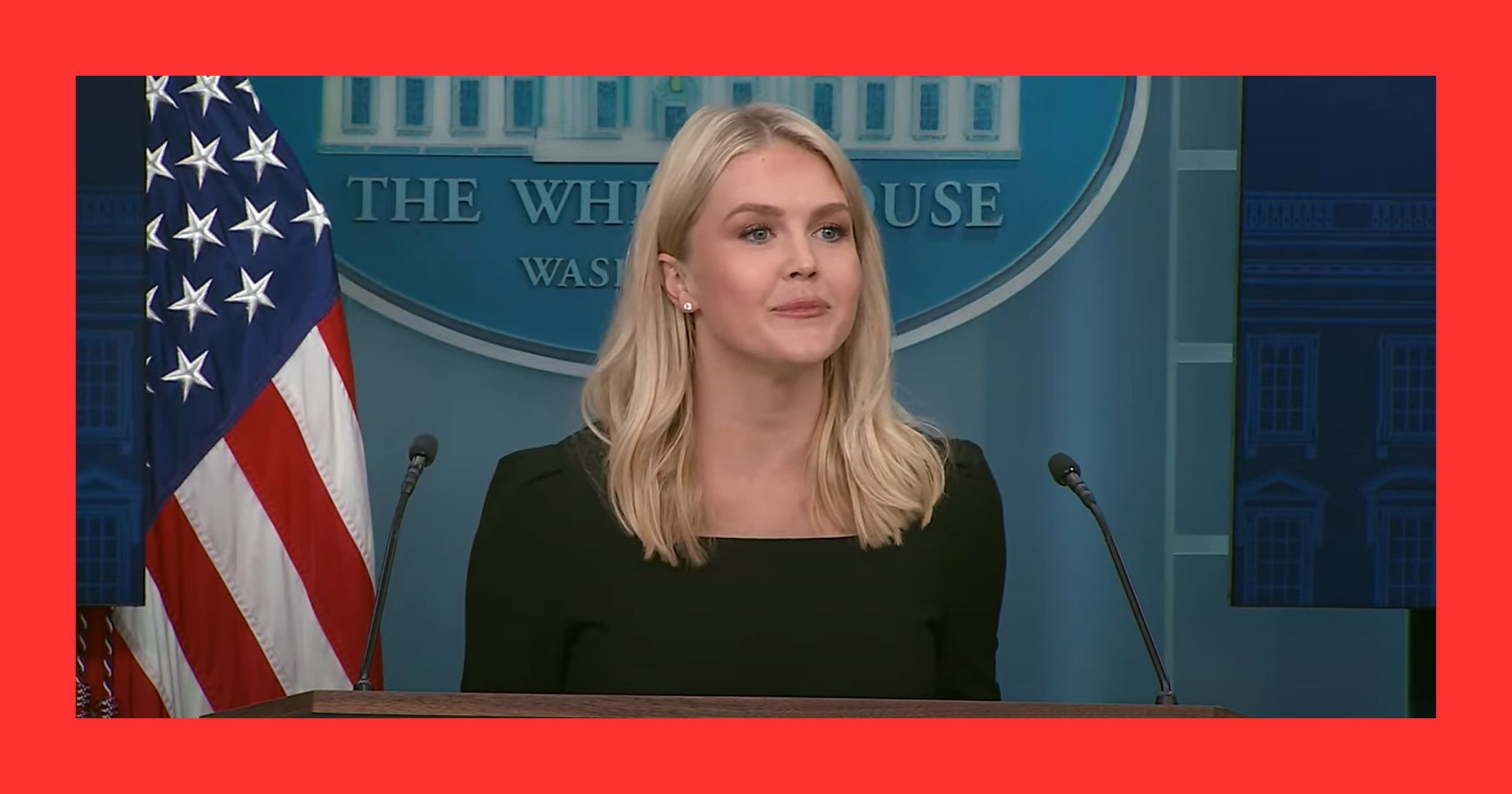
On June 20, White House Press Secretary Karoline Leavitt reiterated a striking claim. Speaking about U.S. strength amid rising tensions with Iran, she said the United States has military capabilities “that no other country on this planet possesses.” No further details were offered.
That kind of statement is not unusual during moments of international pressure. But it raises a real question. What exactly is she referring to?
Some of the most advanced U.S. military programs are publicly documented through DARPA. The OFFSET program has tested drone swarms of up to 250 autonomous vehicles, controlled through immersive command interfaces in urban environments. HAWC, a hypersonic air-breathing missile project, has completed multiple successful tests, flying at speeds over Mach 5 and reaching targets more than 300 nautical miles away. Another program, AMASS, is developing the ability to coordinate large swarms-of-swarms across land, air, and sea, with the goal of overwhelming adversaries through scale and autonomy.
These are not theories. They are real programs with published results, funded and overseen by the U.S. Department of Defense.
But Leavitt’s language goes beyond superiority in known systems. It hints at something else, something undefined. Whether intentional or not, her statement invites speculation. If there are capabilities the public has not seen, it would not be the first time that military strength was signaled long before it was revealed.
by Met Middleson
June 19, 2025
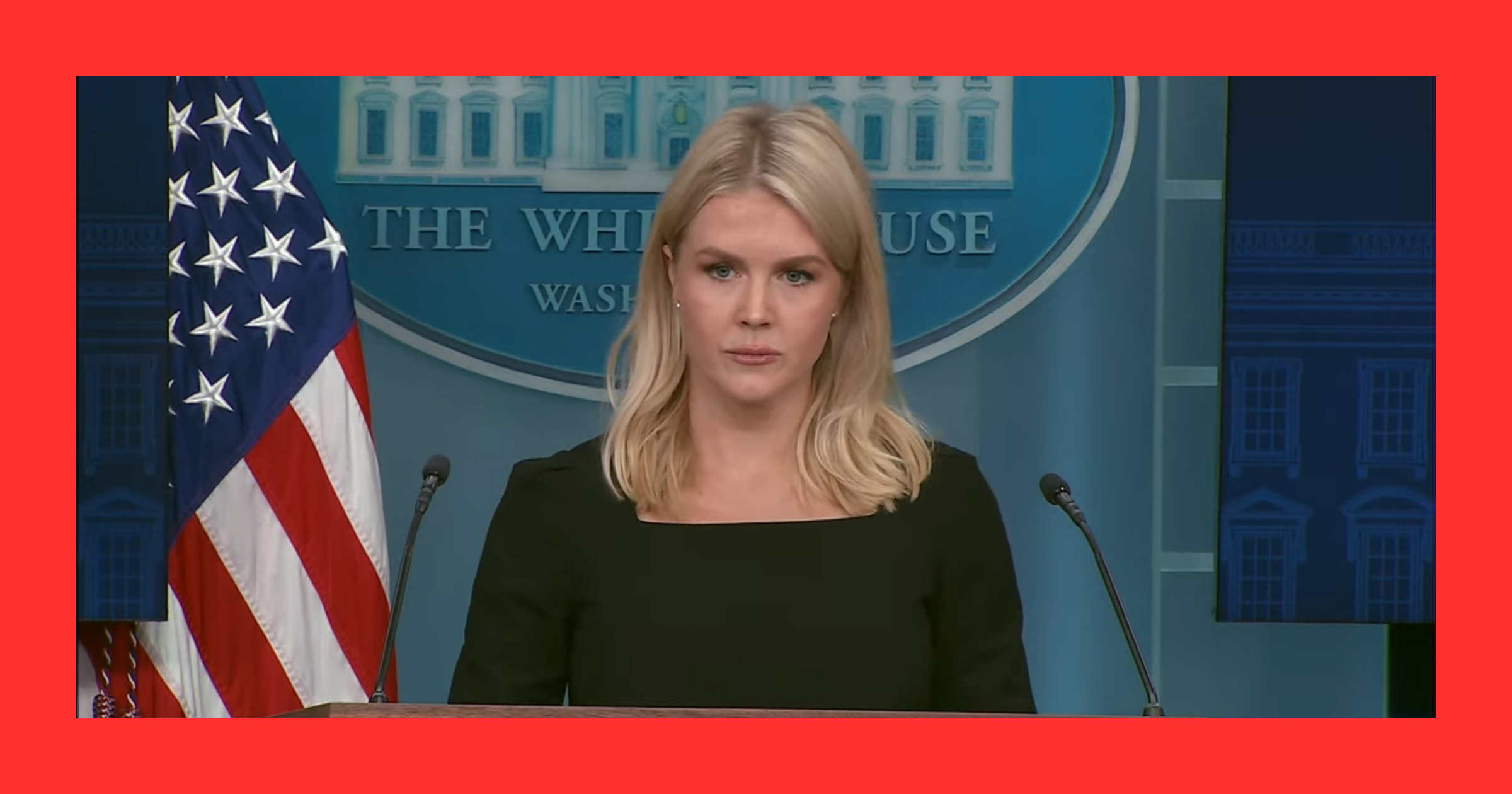
A White House reporter on Tuesday asked Press Secretary Karoline Leavitt to clarify President Trump’s recent claim that Iran is “just weeks away” from a nuclear weapon, prompting a direct and urgent response.
“Can you clarify when the president said a few weeks away, did he mean obtaining enough enriched uranium to start building a weapon or did he mean Iran is a few weeks away from completing the production of a weapon?”
Leavitt responded by asserting that Iran already has everything it needs and that only a political decision stands in the way of full nuclear capability.
“Let’s be very clear. Iran has all that it needs to achieve a nuclear weapon,” she said. “All they need is a decision from the Supreme Leader to do that, and it would take a couple of weeks to complete the production of that weapon.”
She added that the media had failed to represent the situation accurately in its reporting.
“It’s an important question, and it’s one, frankly, the media has been getting wrong,” Leavitt said.
The confusion may stem from conflicting assessments within the U.S. and international intelligence community. In a public hearing earlier this year, Director of National Intelligence Tulsi Gabbard testified that Iran is not currently building a nuclear weapon and that there is no evidence Supreme Leader Ali Khamenei has made a decision to pursue one. The Director General of the International Atomic Energy Agency stated, “We did not have any proof of a systematic effort to move into a nuclear weapon.” Meanwhile, officials have warned that Iran could produce enough fissile material for a bomb in a matter of weeks if it made the decision to do so.
By placing the threshold for nuclear escalation solely on a future decision by Iran’s Supreme Leader, Leavitt’s comments shift public focus directly onto Ayatollah Khamenei. That framing comes as several U.S. lawmakers and former officials have publicly suggested that the only way to prevent Iran from obtaining a nuclear weapon is through regime change. President Trump has not formally endorsed regime change, but has stated repeatedly that Iran’s leadership is the source of instability in the region, and has made direct threats toward the Supreme Leader, including a Truth Social post this week that read, “We are not going to take him out (kill!), at least not for now.”
by Met Middleson
June 19, 2025
President Donald Trump has signed a new executive order delaying enforcement of the TikTok divestment mandate for a third time, now pushing the deadline to September 17, 2025. The latest 90-day extension was announced on Truth Social, where Trump thanked followers for their attention to what he called a matter of national security. The original enforcement deadline under the Protecting Americans from Foreign Adversary Controlled Applications Act was January 19, 2025, but has now been postponed three times.
The executive order explicitly blocks the Department of Justice from penalizing TikTok or any related entities during the delay period. It also requires the Attorney General to issue letters affirming that companies will not be held liable for any actions taken going back to January 19. A key section of the order warns state governments and private actors against taking independent enforcement steps, reaffirming that only the federal executive branch holds that authority.
This latest delay underscores the administration’s balancing act between national security warnings and political risk. While Trump continues to use strong rhetoric about banning TikTok, his repeated extensions raise questions about whether the White House intends to follow through or keep using the threat as leverage.