


The White House – Public domain – via Wikimedia Commons

Trump’s Orbit: Entry Fee? Your Soul
Everyone thinks they’re the exception. None of them are.
by Met Middleson
June 5, 2025



Elon Musk spent years casting himself as the exception to the rule. The man who couldn’t be bought, couldn’t be boxed in, and certainly couldn’t be used. But in Trump’s orbit, that is exactly what happened. The richest man on Earth poured hundreds of millions into Trump’s campaign, reshaped the federal workforce, and accepted the spotlight of state power. Now, less than five months into Trump’s second term, he is on the outside looking in, and saying everything he was not allowed to say before.
THE BUY-IN
By the end of 2024, Musk had committed nearly $300 million to Trump’s reelection efforts. That included super PACs, dark money groups, and direct technical support through AI and campaign targeting firms loosely tied to X. His donations were more than a show of loyalty. They signaled Musk’s alignment with industries that had come under scrutiny during Trump’s administration: Big Tech, electric vehicles, and artificial intelligence. Elon Musk had chosen a side.
Inside Trump’s circle, the effect was immediate. Musk was not just a donor. He was a power broker. He was handed the Department of Government Efficiency, a new agency built for him, and empowered to gut the federal bureaucracy with impunity. He slashed staffing across regulatory agencies. He floated plans to close the EPA. He ordered audits of entire departments. Trump praised Musk as “an incredible patriot” and “one of the greatest business leaders and innovators the world has ever produced,” emphasizing his leadership in what he called “the most sweeping and consequential government reform program in generations.”
THE WISCONSIN SUPREME COURT GAMBLE
Flush with influence, Musk tried to reshape the courts. In early 2025, he pumped millions into Wisconsin’s Supreme Court race, backing a hardline conservative candidate with a digital ground game powered by AI voter modeling. The bet failed spectacularly. The candidate lost by double digits, and Musk became the story. The New York Times dubbed it “the most expensive judicial defeat in state history.” Trump said nothing.
That silence was the beginning of the end.
Musk’s name disappeared from White House briefings. He was cut from official schedules. Allies said he had stepped back to focus on innovation, but the truth was simpler. He had stopped being useful.
THE GOLDEN KEY
When it was time to end the chapter, Trump didn’t fire Musk. He staged it.
In a White House ceremony held in the Oval Office, adorned with American flags and the presidential seal, President Trump presented Elon Musk with a golden key encased in a wooden box. The event, attended by MAGA donors and live-streamed across right-wing platforms, was framed as a gesture of gratitude for Musk’s leadership of the Department of Government Efficiency. President Trump praised Musk’s contributions, stating he had delivered “a colossal change in the old ways of doing business in Washington.”
Musk, sporting a visible bruise near his eye that he claimed came from a playful incident with his son, expressed admiration for the Oval Office’s gold-accented decor and reaffirmed his commitment to the principles of DOGE, describing it as “a way of life.”
But the message couldn’t have been clearer. The key was a prop. The praise was closure. Elon Musk was out.
He smiled. He posed for photos. He said nothing. Not yet.
THEN CAME THE BILL BASHING
The “One Big Beautiful Bill” is Trump’s marquee second-term legislation—a mix of tax reform, deregulation, and federal restructuring. Buried inside its 1,116 pages are quiet reversals of nearly everything Musk helped implement. Green energy tax credits are eliminated. AI transparency provisions have been removed. EV production grants and government contracts tied to sustainability have been slashed without explanation.
Musk is not taking it quietly. He claims the bill will explode the deficit, calling it fiscally reckless and politically self-serving. He also calls the bill a “disgusting abomination” and accuses the administration of sabotaging innovation and gutting the very efficiencies he was hired to deliver. “This is not policy,” he posts. “It’s theft disguised as reform.” He continues urging Congress to kill the bill and uses X to amplify critics from across the political spectrum.
TRUTH SOCIAL WILL GET THE LAST WORD
Trump, characteristically, does not hold back. But in response to Musk’s public criticism, he remains silent. There are no direct mentions, no reposts, no offhand remarks. Just a conspicuous absence where praise once flowed. Some observers note a recent post—”Some people get bitter when they’re not in the room”—and speculate it could be aimed at Musk. But officially, Trump says nothing.
In Trump’s world, betrayal is not measured by substance. It is measured by disloyalty. Musk crosses that line. And like so many before him, he is cast out in full view. Praise evaporates. The silence grows louder. Allies drift away. The richest man in the world, once introduced as Trump’s ultimate ally, becomes just another defector.
IT ALWAYS ENDS THE SAME WAY
Elon Musk thought he could rewrite the rules. He had money, influence, a social platform, and the ear of a president. But in Trump’s orbit, everyone plays the same role eventually. They are welcomed, praised, paraded, and then, when the shine fades or the usefulness ends, they are pushed aside..
Ask Mike Pence. Ask John Bolton. Ask Mark Esper. Ask Anthony Scaramucci. Ask Liz Cheney.
Each believed they were irreplaceable. Each walked away isolated and diminished.
Musk’s story feels different because it is still unfolding. He’s louder. Richer. More unpredictable. But the arc is familiar. And the outcome, unless something changes, is already being written in real time.
In the end, the orbit doesn’t bend toward loyalty. It bends toward utility. And when that runs out, even a man with $300 billion and a key to the government walks out the same way they all do.
Used up. Locked out. And finally, free to speak.

fk ; CSIRO, CC BY 3.0 via Wikimedia Commons


Weaponizing Wheat: CCP Connections Behind a U.S. Agroterror Case
A deadly agricultural fungus. A Chinese researcher with CCP ties. A smuggling plot that stopped just short of a U.S. lab.
by Met Middleson
June 4, 2025
Federal prosecutors have just unsealed charges against two Chinese nationals accused of attempting to smuggle a deadly crop fungus into the United States. The Justice Department alleges that Yunqing Jian, a researcher at the University of Michigan, and her boyfriend, Zunyong Liu, conspired to bring samples of Fusarium graminearum into the country. The fungus is known to destroy wheat crops and produce toxins harmful to both humans and livestock. Liu was intercepted at Detroit Metropolitan Airport in July 2024 with the samples hidden in his backpack. Jian, who had received Chinese government funding for her research and expressed loyalty to the Chinese Communist Party, was arrested months later. The pathogen never reached the lab, but the incident has raised urgent concerns about agricultural security, research oversight, and foreign political influence in the United States.
THE PATHOGEN
Fusarium graminearum is not just a nuisance fungus. It causes Fusarium head blight, one of the most destructive diseases affecting wheat, barley, and other cereal crops. Infected plants can suffer major yield losses, and even small outbreaks can render entire harvests unsafe for consumption due to the toxins the fungus produces. Those toxins, particularly deoxynivalenol, are harmful to both humans and livestock.
The USDA has classified the pathogen as a serious threat to U.S. agriculture. Scientists have warned that its spread could destabilize global grain markets and drive up food prices. Under normal circumstances, handling this fungus in the United States requires strict federal approval and containment protocols. The lab Jian worked in had none of those.
THE RESEARCH CONNECTION
At the time of the incident, Yunqing Jian was a researcher at the University of Michigan. She had previously conducted studies on Fusarium graminearum while working in China, where her research was funded by the Chinese government. Investigators say that her boyfriend, Zunyong Liu, was attempting to deliver samples of the same pathogen directly to her lab in Ann Arbor.
But there was a critical problem. Jian’s lab was not cleared to receive or handle that type of biological material. In the United States, working with high-risk agricultural pathogens requires federal registration and strict containment procedures. Her lab had no such authorization. According to federal officials, there was no permit application, no biosafety plan, and no chain of custody. Just a fungus in a backpack, bound for a university lab that should never have been in the picture.
THE CCP TIES
According to federal investigators, Yunqing Jian was not just a visiting researcher. She had previously conducted work on Fusarium graminearum in China with funding from the Chinese government. Electronic records recovered during the investigation showed she had declared loyalty to the Chinese Communist Party and maintained communication with Chinese academic institutions during her time in the United States.
The Justice Department has not publicly disclosed the full scope of her research activities overseas. However, the fact that she had worked on a pathogen considered high-risk by U.S. agricultural authorities and then allegedly attempted to receive it at a U.S. lab without federal clearance has raised broader concerns. Among them is the question of intent. Was the goal to simply continue her previous research, or to push the boundaries of what that fungus could do?
There is no confirmed evidence that Jian was conducting gain-of-function research, but the possibility cannot be dismissed outright. Scientists have warned that modifying fungal pathogens to increase their virulence, toxin output, or resistance to treatment is not only feasible but carries serious agricultural and economic implications. In the wrong hands, a crop disease can become a tool of disruption. In this case, the hands involved were closely aligned with the Chinese Communist Party.
ACADEMIA AND ACCESS
The United States has long positioned its universities as global hubs of innovation and discovery. International collaboration is common, even encouraged, in research programs across disciplines. But that openness can also be exploited. A case like this, where a foreign national with declared loyalty to a rival government allegedly attempted to bring a dangerous pathogen into an American lab without authorization, has become a flashpoint in a broader debate.
The Trump administration has repeatedly warned of foreign actors using academic institutions as access points to sensitive knowledge and infrastructure. Supporters argue that this case validates their concern. Critics say the risk is real but should not be used to justify blanket suspicion or restrictions on international students and scholars. Either way, the questions are growing louder. Who gets access? What should be off-limits? And what responsibilities do universities bear when their openness becomes a point of national vulnerability?
What began as an airport search is now a federal case involving biological risk, academic access, and geopolitical tension. The samples never made it into the lab, but the questions they raised have already arrived. In a world where pathogens can cross borders more easily than policy can keep up, the line between science and strategy is getting harder to define.
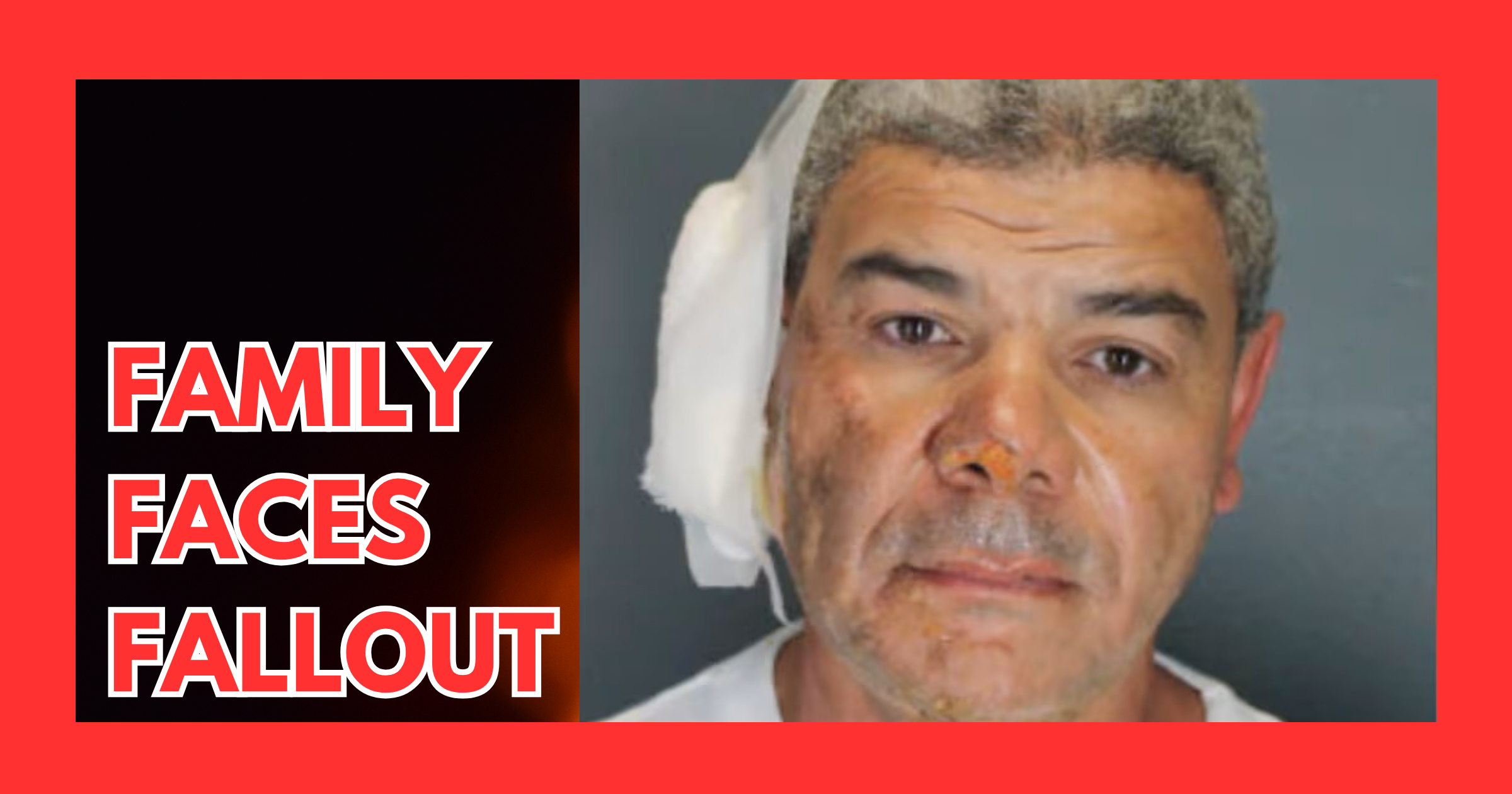
The Aftershock: A Family Faces Removal After a Terror Attack
by Met Middleson
June 4, 2025
Twelve people were injured when Mohamed Sabry Soliman threw firebombs into a pro-Israel rally in Boulder. In the days that followed, his wife and five children were taken into ICE custody. They have not been charged with any crime. But their visas were connected to Soliman’s pending asylum case, which was canceled after the attack. Now the government is preparing to deport them.
THE ATTACK
Witnesses say Soliman arrived at the Boulder rally dressed as a landscaper. He moved calmly through the crowd before throwing multiple Molotov cocktails and shouting “Free Palestine.” The explosion sent shrapnel and flame into the crowd, injuring twelve people, including a Holocaust survivor in her 80s.
Authorities later revealed the attack had been planned for more than a year. Soliman had visited the rally location several times in advance. Investigators believe he delayed the assault until after his daughter’s high school graduation. He was arrested later that evening in Colorado Springs.
WHO IS MOHAMED SOLIMAN?
Mohamed Soliman entered the United States legally in 2022 on a tourist visa. He applied for asylum a few weeks later, claiming he had been targeted by security forces in Egypt. While his application was pending, he was granted a temporary work permit that expired earlier this year.
He had been living in Colorado Springs with his wife and five children. Prosecutors say Soliman built homemade explosives in secret and studied the rally site in advance. He is now facing federal hate crime charges, attempted murder, and use of explosives. He is being held on a ten million dollar bond.
THE FAMILY DETENTION
Soon after Soliman’s arrest, federal agents detained his wife and their five children. They were taken into ICE custody and transferred to a facility outside Denver. According to the Department of Homeland Security, the entire family had been living in the United States legally through dependent visas tied to Soliman’s asylum case.
When that asylum case was terminated, their visas were automatically revoked. No one in the family has been charged with a crime. But because their legal status was connected to someone now accused of terrorism, immigration authorities moved quickly to begin removal proceedings.
THE LEGAL BASIS
The Department of Homeland Security states that the family’s visas were revoked because they were tied to Soliman’s now-terminated asylum application. Under U.S. immigration law, when an individual’s legal status is revoked, any derivative visas granted to family members can also be invalidated. . This allows immigration authorities to initiate expedited removal proceedings for those family members.
Expedited removal is a process that permits the swift deportation of non-citizens without a formal hearing before an immigration judge. It is typically applied to individuals who have been in the U.S. for less than two years and are found to be without legal status. In this case, the government has placed Soliman’s wife and children into expedited removal proceedings, citing the revocation of their visas as the basis.
While the family has not been charged with any crime, authorities are investigating whether they had prior knowledge of Soliman’s actions. However, under current immigration policies, such an investigation is not required to proceed with deportation if the individuals are found to be without valid legal status.
QUESTIONS OF POLICY
Federal officials have framed the deportation as a matter of national security. Homeland Security Secretary Kristi Noem said the government acted to remove anyone no longer authorized to remain in the country, especially in a case involving a suspected act of domestic terrorism. Legal experts agree that immigration authorities are within their rights to do so.
Still, the situation raises deeper questions. None of the family members have been accused of helping Soliman or knowing about the plot. Their removal hinges not on criminal behavior, but on a visa relationship that no longer exists. For some, that looks like a necessary step to protect the country. For others, it looks like punishment by association.
The firebombing shocked a community. The response is now testing the boundaries of immigration law, national security, and fairness. The facts are clear. A man committed an act of violence. His family, legally present until that moment, now faces removal. What remains less clear is whether their departure will be seen as justice or as something entirely different.
The Quiet Kill of Job Corps
The Trump administration promotes trade careers loudly but shuts down the programs that made them reachable for the lowest-income students.
by Met Middleson
June 3, 2025
The Trump administration has made workforce development a signature talking point, promising a national revival of skilled trades and blue-collar pride. But while the speeches get louder, the programs that once delivered those careers are going silent.
CONTEXT MATTERS
The Job Corps program was created in 1964 to offer job training, housing, and education to low-income youth across the country. For decades, it has been a critical safety net for students who fell outside the reach of traditional public education, including those who dropped out, those who aged out, and those who were simply overlooked.
Now, nearly every contractor-operated center in the country is scheduled to close. The decision, announced by the Department of Labor under the Trump administration, will eliminate nearly 100 Job Corps sites by the end of June 2025.
FOLLOW THE MONEY
The Department of Labor cited a $140 million deficit in 2024, projected to rise to $213 million in 2025, as a primary reason for the Job Corps shutdown. Officials also pointed to a 38.6 percent graduation rate and reports of misconduct to justify the closures.
However, these cuts align with a broader agenda led by the Trump administration to reduce what it deems as inefficiencies in the federal government. Central to this initiative is the Department of Government Efficiency (DOGE), established in January 2025 and initially led by Elon Musk. DOGE has been instrumental in implementing aggressive cost-cutting measures across various federal programs, including education and workforce development.
Critics argue that the closure of Job Corps centers is less about program performance and more about a political strategy to dismantle publicly funded services in favor of privatized alternatives. While the administration proposes increased funding for career and technical education, these funds often flow through state systems and may not reach the marginalized students that Job Corps served.
Furthermore, the administration’s broader education budget includes significant cuts to programs like Pell Grants and Federal Work-Study, further limiting opportunities for low-income students
The administration’s actions suggest a preference for privatized, pay-to-play trade education, leaving behind those who need support the most.
DIFFERENT STUDENTS, DIFFERENT NEEDS
While many public high schools and community colleges now offer trade programs, Job Corps has long served a distinct and often more vulnerable population. The program specifically targets low-income youth aged 16 to 24 who face significant barriers to education and employment. According to the U.S. Department of Labor, approximately 80 percent of Job Corps participants have not completed high school, and many come from challenging socio-economic backgrounds.
Unlike traditional trade schools, which typically require tuition and may not provide comprehensive support services, Job Corps offers its students free housing, meals, healthcare, and a structured environment conducive to learning. This residential model is crucial for students who lack stable housing or supportive home environments. For instance, at the Glenmont Job Corps Center in New York , 98 percent of students live on campus, many having come from dangerous or impoverished circumstances.
In essence, for students who cannot afford tuition, lack reliable transportation, or do not have a high school diploma, Job Corps is not merely an alternative—it is often the only viable pathway to gainful employment and self-sufficiency.
POLITICAL CONTRADICTIONS
While the administration has proposed a $900 million increase for career and technical education, most of that funding supports programs inside high schools and community colleges. Job Corps served students who were no longer enrolled in either.
Eliminating that program creates a void with no clear replacement. These are students who have already aged out of the traditional system or were never part of it to begin with. Without Job Corps, many of them will not have access to trade education at all—no tuition assistance, no housing, and no structured path into the workforce.
REBUILDING FOR FEWER PEOPLE
This is not just a shift. It is a signal. Federal programs that once served the margins are being dismantled in favor of private-sector alternatives, often with high tuition, fewer supports, and greater barriers to entry. Trade school will still exist, but increasingly only for those who can already afford it.
Supporting trade careers should mean expanding access, not eliminating it. If we are going to rebuild American labor from the ground up, we cannot start by locking out the people who need it most.
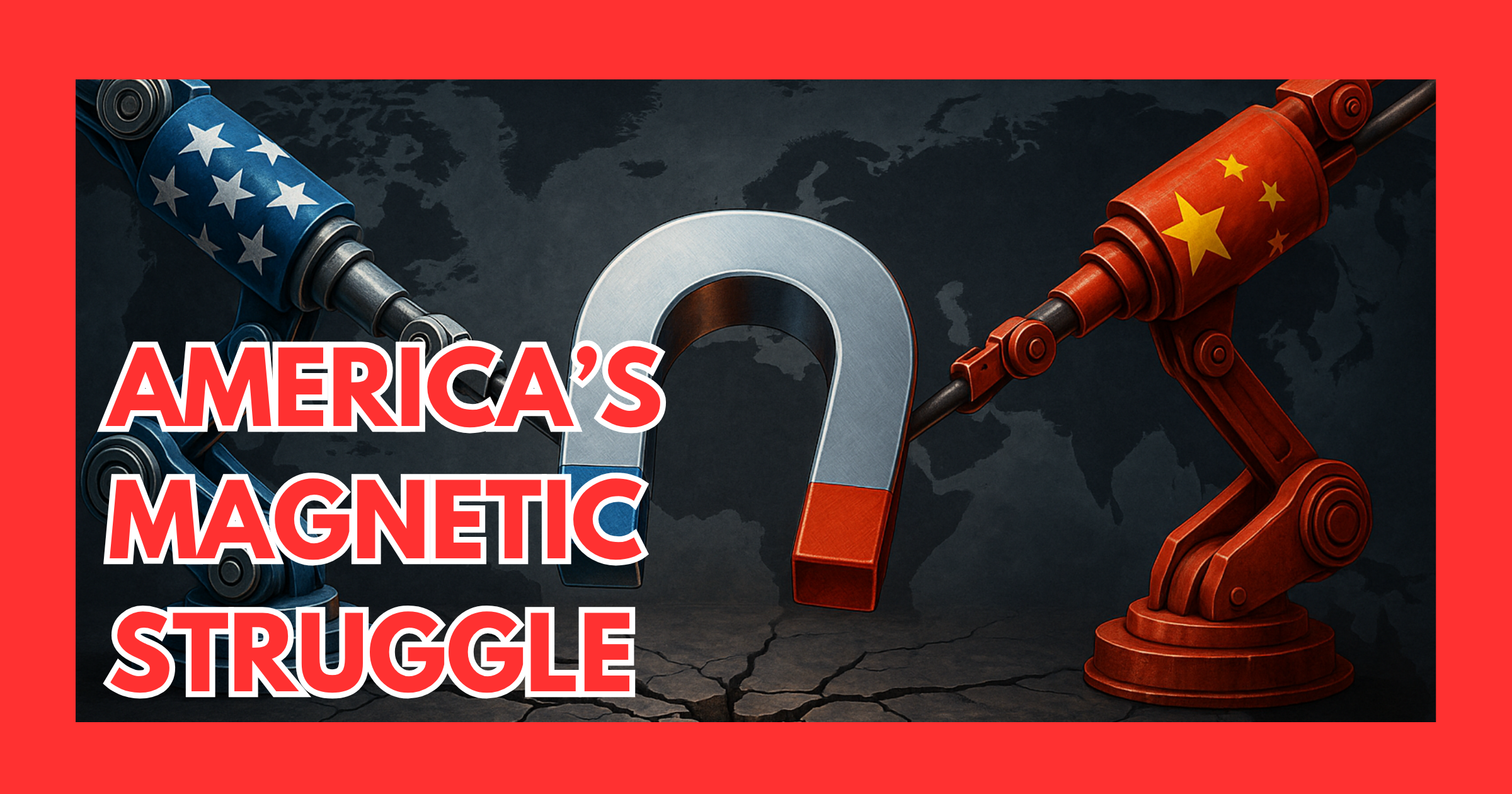
Weaponized Magnets: The Quiet Power Struggle with China
They’re in your phone, your earbuds, your car, your power grid, and your fighter jets.
by Met Middleson
June 3, 2025
The most powerful magnets in the world fit in your hand, but they carry the weight of global power. These are rare earth magnets. You’ll find them in smartphones, electric vehicles, drones, and missile guidance systems. Over 90 percent are made in China.
WHAT ARE RARE EARTH MAGNETS?
Rare earth magnets are unmatched in strength. They make small motors more efficient, speakers louder, and navigation systems more precise. No other material delivers the same performance in such a compact package.
These magnets depend on a handful of obscure minerals. They’re not especially rare, but turning them into something usable is messy, expensive, and tough on the environment. Most countries backed off. China didn’t.
HOW THEY’RE MADE AND WHY THAT MATTERS
Making these magnets takes a lot more than just digging up rocks. It starts with mining huge amounts of ore, then isolating the small amounts of usable material inside. That process involves powerful acids, high heat, and complex chemical steps. What comes out is useful. What’s left behind is toxic waste, radioactive sludge, and mountains of polluted byproduct. This is one of the dirtiest supply chains in modern industry, and one of the most difficult to clean up.
China decided it was worth the mess. While other countries pulled back from rare earth production, China kept going. It didn’t just invest in mining. It built refineries, smelters, factories, and shipping routes to control every step from raw rock to finished product. That control now stretches across most of the world’s supply. Even MP Materials, the largest rare earth producer in the United States, sends its mined ore to China to be refined. The reason is simple. America doesn’t have the full system in place. There aren’t enough trained workers, processing plants, or streamlined permits to handle it here. So the raw material leaves the country, and the finished magnets come back with a made-in-China label. MP Materials, based in Las Vegas, supplies around 15 percent of global rare earth demand but still depends on China to turn that supply into finished parts.
CHINA’S ADVANTAGE AND AMERICA’S RISK
China does not just export rare earths. It controls the entire process from digging them out of the ground to shaping them into finished magnets. These magnets are inside American fighter jets, missile guidance systems, naval radar, and satellites. They are not optional parts. There is no easy substitute. If China decides to cut off the supply, production would not just slow down. It would stop.
Defense contractors in the United States still depend on Chinese-made components to build some of the most advanced military systems in the world. There is no reserve of magnets set aside for emergencies. There is no backup supplier on American soil ready to fill the gap. For more than a decade, military planners and government researchers have warned that this is a national security risk. Efforts to rebuild the supply chain have been slow, blocked by complicated regulations, limited budgets, and a lack of long-term planning. The issue has been passed from one administration to the next, but never fully solved.
TRUMP’S GREENLAND MOVE
When Donald Trump first floated the idea of buying Greenland in 2019, it sounded like a punchline. He brought it up again in late 2024, and it was mocked just as quickly. Most people treated it as a real estate stunt. But there was a deeper motive. Greenland holds some of the richest rare earth deposits on the planet. The Trump team understood the stakes. With China tightening its grip on global supply chains, gaining access to those minerals would have given the United States a powerful edge. It was not about land. It was about leverage.
Southern Greenland’s Kvanefjeld site holds exactly the materials needed to make high-performance magnets. By the time Trump revisited the idea in 2024, Chinese companies were already there. Through joint ventures and long-term agreements, they had secured influence over one of the most valuable undeveloped rare earth sources in the world. The United States was late, and the project soon stalled under pressure from environmental groups and public opposition. Still, the episode exposed something important. The next global fight over resources is not about oil. It is about minerals most people have never heard of, buried in remote places that suddenly matter a lot.
CAN THE UNITED STATES CLOSE THE GAP?
The United States has the raw materials. Mines like Mountain Pass in California sit on top of valuable rare earth deposits. But having the minerals is only the first step. What comes next is harder. Refining the materials, turning them into magnets, and building them into advanced technology all require a system that is still missing.
There are signs of progress. MP Materials is building a plant to make magnets here in the United States. Urban Mining Co. is recovering rare earths from recycled electronics. These efforts matter, but they are not enough on their own. The country still does not have the scale, the skilled workforce, or the coordination needed to match what China has built. In his second term, Donald Trump has renewed calls for domestic production of critical minerals and announced new funding to support rare earth research and processing. But the gap is still wide. Until the United States can build the full system from mining to finished product, it will continue to rely on its biggest competitor for the materials that keep the economy running and the military ready.
Rare earth magnets are easy to overlook. They are small, silent, and hidden inside the devices we rely on every day. But they are also essential. Without them, engines stall, weapons fail, and critical systems stop working. Right now, the most advanced economy on Earth depends on its primary competitor for the materials that make it run. This is not just about trade. It is about power, and who holds it.

Spiderweb: Ukraine’s Drone Offensive and the Future of Modern War
The war in Ukraine just sent a message to the rest of the world. That message arrived by drone.
by Met Middleson
June 2, 2025
In late May, Ukraine carried out a carefully planned drone strike deep inside Russian territory. The mission, known as “Spiderweb,” targeted several military airfields across at least three regions. Ukraine used 117 drones in the attack. Many were hidden inside wooden crates and launched from modified trucks. The Security Service of Ukraine (SBU) released video footage showing drones striking Russian bombers on the ground. This marked more than a tactical victory. It introduced a new kind of war.
TACTICS ON DISPLAY
Ukraine prepared for Operation Spiderweb over the course of 18 months. The plan began with smuggling drone components across the Russian border. Ukrainian operatives assembled the systems inside Russian territory, often near strategic airfields. Once complete, the drones were placed in specially built wooden containers that disguised their purpose. These containers were then loaded onto civilian trucks.
In a calculated twist, Ukraine arranged for unwitting Russian drivers to deliver the drone-laden trucks near targeted airbases. The list of known targets included Olenya, Belaya, Ivanovo, Dyagilevo, and Ukrainka. Once on site, the containers were remotely activated. Their roofs opened automatically, and the drones launched upward without alerting surrounding defenses. The entire operation was controlled off-site, and all Ukrainian personnel safely exited the country before launch.
Ukraine selected a mix of first-person view drones, many of them modified from commercial designs. Each one was equipped with artificial intelligence capable of locking onto vulnerable parts of enemy aircraft, such as fuel tanks or engine sections. This increased the likelihood of destroying high-value targets in a single hit. In some cases, booby traps were added to the containers to prevent Russia from reverse-engineering the launch mechanisms.
The strikes damaged or destroyed more than 40 aircraft. Russian sources admitted to losing at least five bombers. Independent analysts reviewing satellite imagery believe the real number is significantly higher. The final damage tally includes Tu-95 and Tu-22M3 bombers along with at least one A-50 early warning aircraft. Estimates place the total loss at roughly $7 billion.
A SHIFT IN WARFARE
The operation gave Ukraine more than a battlefield edge. It sent a signal about what warfare now makes possible. A smaller nation found a way to strike inside a nuclear power’s borders using equipment that costs less than a guided missile and requires no pilot.
This approach changes everything. National borders offer less protection. Traditional air defenses can miss low-flying threats. Military strategy starts to look outdated when small, silent drones can carry out real attacks from nearby ground positions.
THE VULNERABILITY QUESTION
Spiderweb worked because it used methods that any advanced country could copy. A nation like China could develop similar tactics. What happens if one day that capability gets turned on a city or military site in the United States?
The truth is, many key parts of American life are not built to withstand an attack like this. Our government has invested heavily in jets, submarines, and satellites. But a wave of cheap drones flying low to the ground could slip past those systems. Sites like airports, power plants, and data centers were never designed with drone warfare in mind. Most rely on fences and guards, not high-tech defense.
THE DOMESTIC DEBATE
In Washington, leaders often focus on cyber threats, troop movements, and major powers. But Spiderweb showed a different kind of threat. This one did not require a formal army. It only needed a person with a remote control and a vehicle that could carry some boxes.
For years, defense experts warned that drone warfare could level the playing field between smaller nations and military giants. Spiderweb turned that theory into fact. Ukraine didn’t need long-range missiles or strategic bombers to strike deep inside Russian territory. It used patience, planning, and off-the-shelf technology. That formula is no longer hypothetical. It is now part of modern war.
ARE WE READY?
The United States has built a defense system around the assumption that serious threats come from the sky or across oceans. We track missiles with satellites. We detect incoming aircraft with radar and scramble fighters in response. But Operation Spiderweb forces a different kind of question. What happens when the threat does not arrive in one piece? What if it enters as parts inside delivery vans, disguised as farm equipment, or buried inside wooden crates? What if it launches from a parking lot, a storage unit, or a shipping yard? These are not science fiction scenarios. Ukraine just proved they are not only possible but effective.
Once a weapon crosses into the country in pieces and someone assembles it within our own borders, the attack no longer looks foreign. It looks domestic, at least until the damage is done. Our systems are not built to recognize that shift. The legal frameworks around intelligence sharing, surveillance, and emergency response all rely on the idea that a foreign attack comes from the outside. But in this model, the line between foreign and local disappears. The origin may be overseas, but the impact starts here, quietly and without warning.
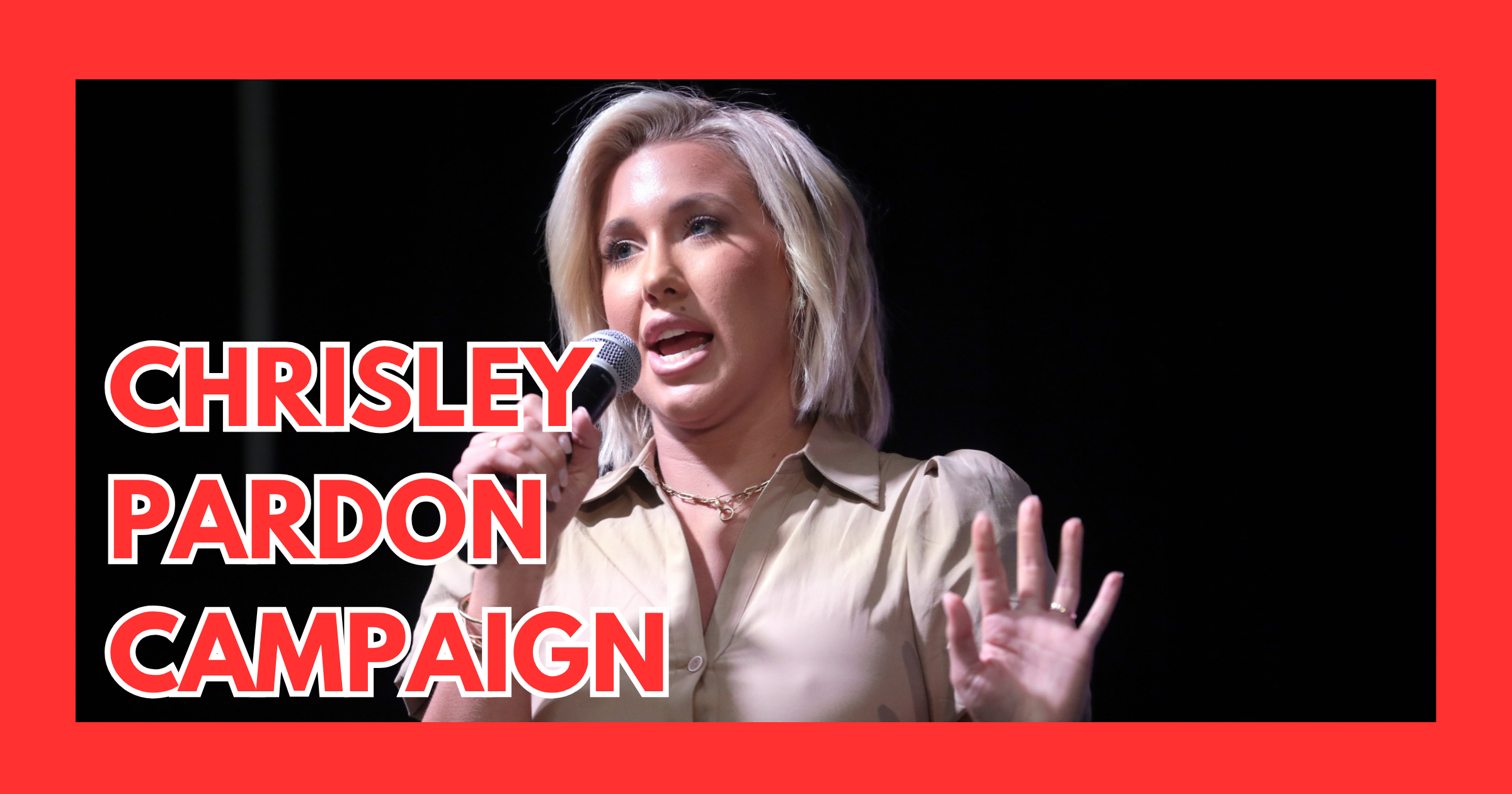
Photo by Gage Skidmore, via Flickr (CC BY 2.0)
The Daughter’s Deal: How Savannah Chrisley Got a Presidential Pardon
She didn’t just visit the White House. She brought a plan, and it worked.
by Met Middleson
June 2, 2025
Todd and Julie Chrisley built their fame on the image of a perfect southern lifestyle. Behind the scenes, prosecutors said it was held together by fake bank statements and tax evasion. Their 2022 conviction carried real weight, with Todd sentenced to twelve years and Julie to seven. But less than halfway through their terms, both are free. That turn of events had less to do with the justice system and more to do with a camera-ready daughter who knew exactly how to play the political stage.
A FAMILY BRAND, CONVICTED
The Chrisleys rose to fame through their USA Network reality series Chrisley Knows Best, a glossy show about wealth, faith, and family discipline. But in 2022, federal investigators exposed the foundation as fraudulent. The couple was convicted of securing over thirty million dollars in loans through falsified financial records and then attempting to obstruct justice during the investigation.
They reported to federal prison in early 2023. Todd was sent to Pensacola, Florida, while Julie was assigned to Lexington, Kentucky. Both began serving what were expected to be long sentences. That is, until their daughter decided to rewrite the ending.
FROM RNC STAGE TO WHITE HOUSE TABLE
Savannah Chrisley launched her campaign to free her parents not with legal filings but with political access. She appeared at the 2024 Republican National Convention and quickly aligned herself with figures close to Donald Trump. Among them was Alice Marie Johnson, who had once received a Trump pardon herself and was now helping others navigate that same process.
Savannah made media appearances, issued statements, and attended a high-profile luncheon at the White House. Her message focused on prosecutorial overreach, harsh sentencing, and what she called a double standard for public figures. It was a carefully managed mix of public sympathy and private influence. And it made its way directly to the president.
THE CALL THAT CHANGED EVERYTHING
On May 27, 2025, while shopping in Tennessee, Savannah got a phone call. President Trump was on the line. He told her that Todd and Julie would be pardoned that day. He said he believed they had been treated too harshly. The news broke online almost instantly. Savannah appeared in a “Make America Great Again” hat. The family home was decorated in red, white, and blue. The return to television had already begun.
The pardon was unconditional. Both sentences were wiped clean. The timing, just ahead of summer campaign season, added another layer of attention. Trump’s critics pointed to the decision as part of a pattern. His supporters praised it as justice served.
CELEBRITY, STRATEGY, AND SECOND CHANCES
This was not a quiet commutation. It was a media event with careful staging. Savannah’s campaign blurred the line between legal advocacy and brand management. While some praised her determination, others saw it as a symbol of privilege in action. The question for many was not whether the Chrisleys were guilty, but whether any other family could have pulled off the same result.
Savannah made no apologies. She said she would keep fighting for others who were unjustly imprisoned. Todd Chrisley echoed that message, telling ABC News that he had seen racial disparities in prison and intended to speak out. For Trump, the family’s renewed public presence may be the real win. A pair of once-convicted influencers now stand as symbols of his second-term reach.
PARDONED. NOW PREMIERING AGAIN.
Less than a week after their release, the Chrisleys announced a new reality series. The show will air on Lifetime and promises an inside look at their legal ordeal and the family’s return to normal life. Whether viewers see it as a comeback or a rebrand may not matter. The cameras are rolling again.
Their story is no longer just about money or fame. It is about what influence looks like when it is well-timed, well-connected, and unrelenting. Savannah Chrisley did not wait for a second chance. She asked for it directly. And in giving it, Trump reminded the country that loyalty still opens doors, especially when the cameras are rolling.
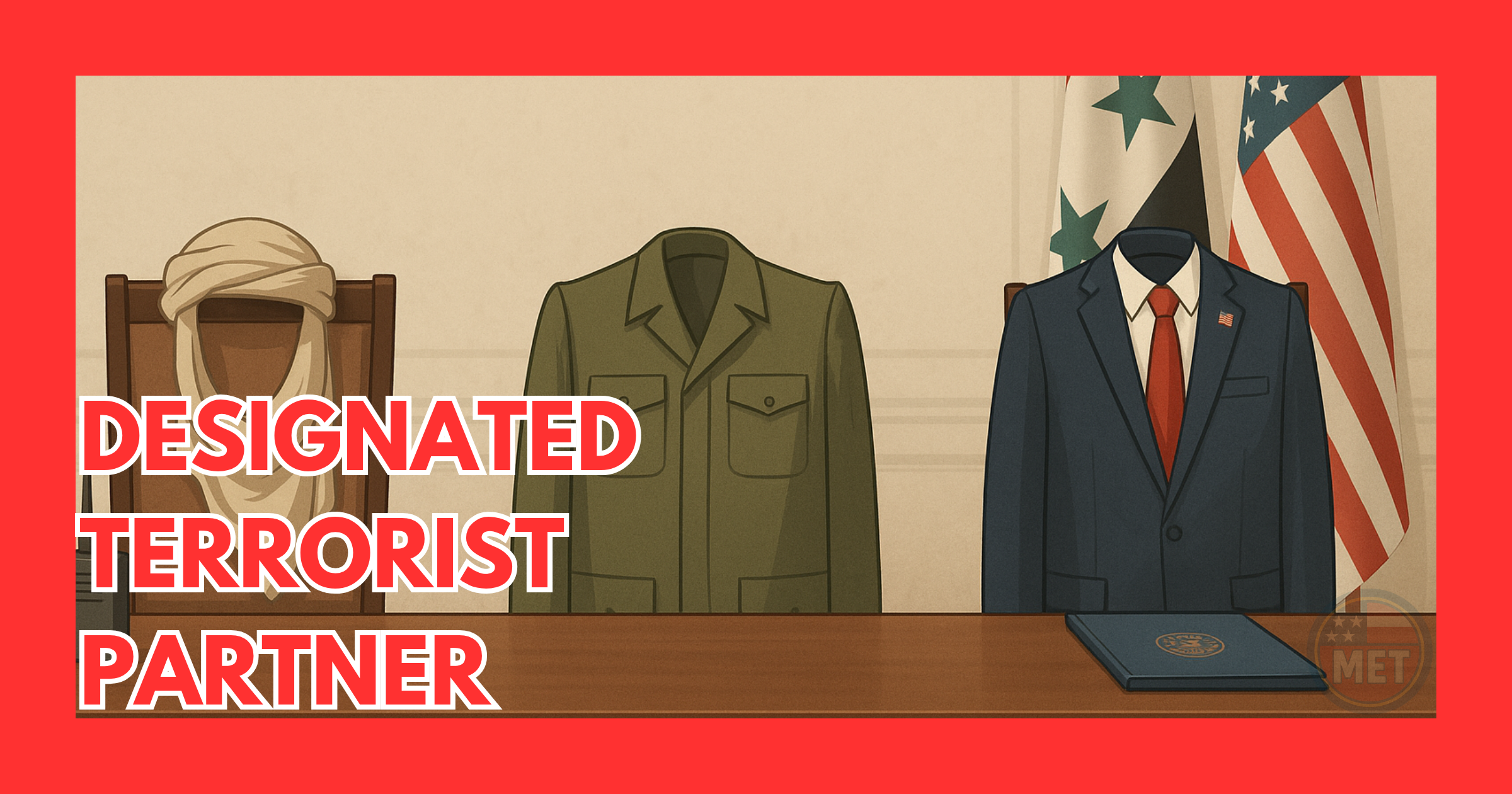
Ahmed al-Sharaa: From Insurgent to Head of State
As President Trump lifts sanctions and reopens diplomatic channels with Syria, the spotlight turns to a leader once tied to a U.S.-designated terrorist group with roots in al-Qaeda.
by Met Middleson
June 1, 2025
The world’s attention turned to Ahmed al-Sharaa as the United States formally lifted all remaining sanctions on Syria. The announcement came during President Trump’s visit to Riyadh, where he met directly with Sharaa, now recognized as Syria’s interim president. For many, the policy shift marks a new chapter in U.S. engagement. For others, it raises an older question: can a man formerly tied to a terrorist organization be trusted with rebuilding a state?
Ties to Designated Terrorist Groups
Ahmed al-Sharaa rose to prominence during the Syrian civil war as a senior figure within Hay’at Tahrir al-Sham (HTS), a coalition of Islamist rebel groups formed in 2017. HTS emerged from factions that included Jabhat al-Nusra, which served as al-Qaeda’s official affiliate in Syria for several years. Though HTS later claimed to sever formal ties with al-Qaeda, both the U.S. government and the United Nations have continued to classify it as a terrorist organization with deep leadership and operational links to al-Qaeda’s regional network.
Sharaa was identified in multiple intelligence reports between 2017 and 2021 as a commander and political coordinator within HTS, operating primarily in Idlib province. His involvement in the group during its most militant phase remains part of his public record. In recent years, he has sought to distance himself from the group’s past affiliations, presenting himself as a nationalist figure focused on governance rather than ideology.
A Power Vacuum and a New Face
Following years of attrition and shifting alliances, the Assad regime lost control of key territories in late 2024. Internal defections, economic collapse, and the withdrawal of Russian military support created the opening for a transitional arrangement. A provisional governing council was formed under regional pressure. Sharaa, with support from several tribal leaders and former opposition blocs, emerged as the consensus figure to lead it.
In January 2025, he was formally declared interim president. His government has since focused on restoring electricity and water access, reopening border trade, and drafting a new constitutional framework with support from Arab League mediators.
A U.S. Reintroduction to Syria
President Trump’s May 13 visit to Riyadh marked the first direct meeting between a sitting U.S. president and a Syrian leader since the start of the war. Speaking alongside Gulf partners, Trump announced the lifting of all U.S. sanctions on Syria and praised Sharaa’s leadership as “committed to stability, to rebuilding, and to peace.”
The decision was met with swift implementation. The U.S. Treasury issued General License 25 to permit trade and investment, and the State Department granted a six-month waiver under the Caesar Syria Civilian Protection Act. While no formal security agreement was signed, officials described the move as “a first step in a long process.”
International Response: Skepticism and Strategy
France and Germany released cautious statements questioning the legitimacy of a transitional government led by a former militant. Russia, long allied with the Assad regime, acknowledged the power shift but withheld endorsement. Iran has made no official comment.
In contrast, Saudi Arabia and the UAE welcomed the U.S. announcement, emphasizing Sharaa’s role in preventing further Iranian influence in western Syria. Jordan, Egypt, and Turkey have begun bilateral talks with Damascus under Sharaa’s leadership.
The Path Forward
The reintroduction of Syria into formal diplomatic channels presents new opportunities for reconstruction and reintegration. Yet questions about Sharaa’s past remain unresolved. The balance between pragmatism and principle will shape how the international community engages in the months ahead.
As Syria reopens for business and diplomacy, trust may prove harder to restore than infrastructure.